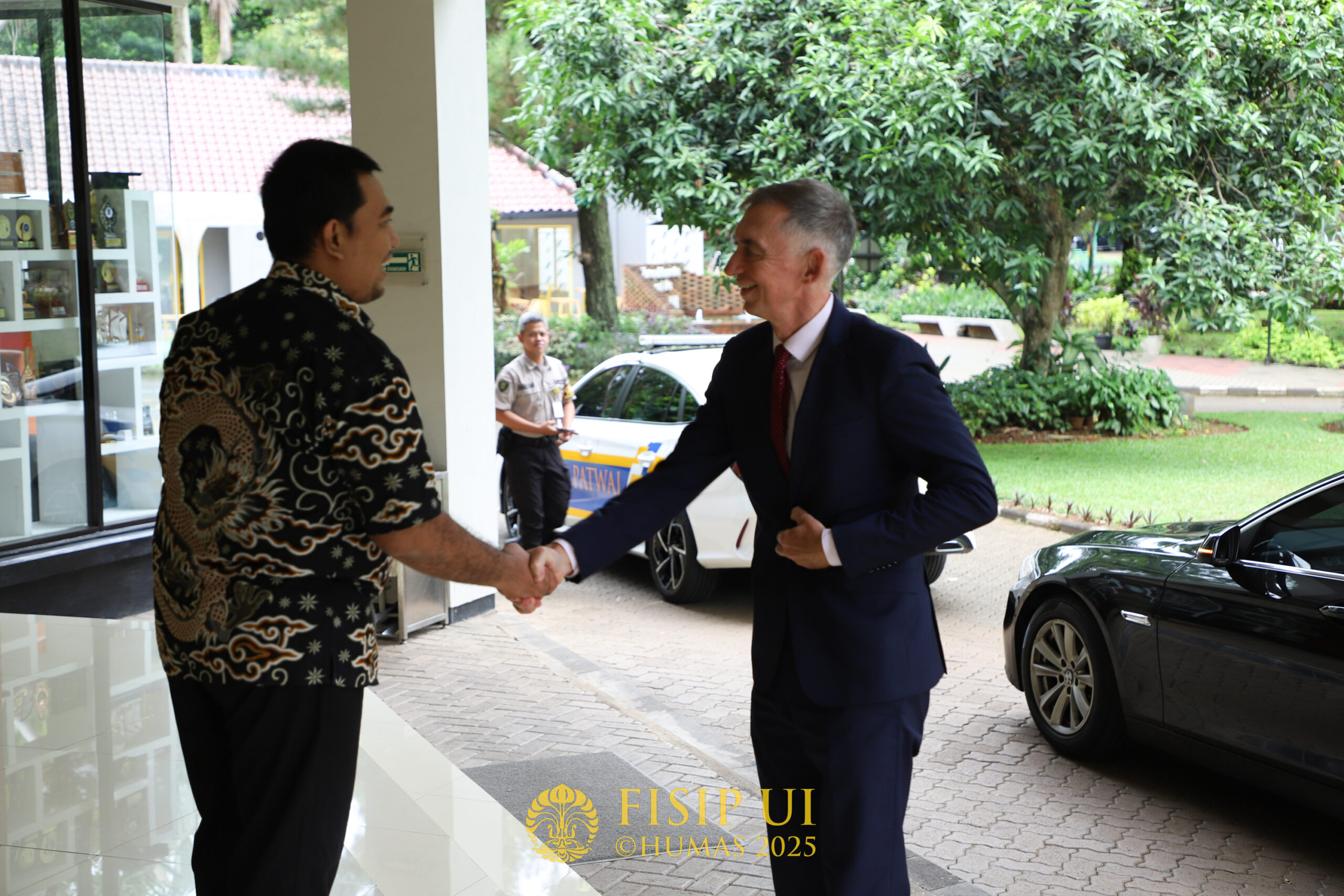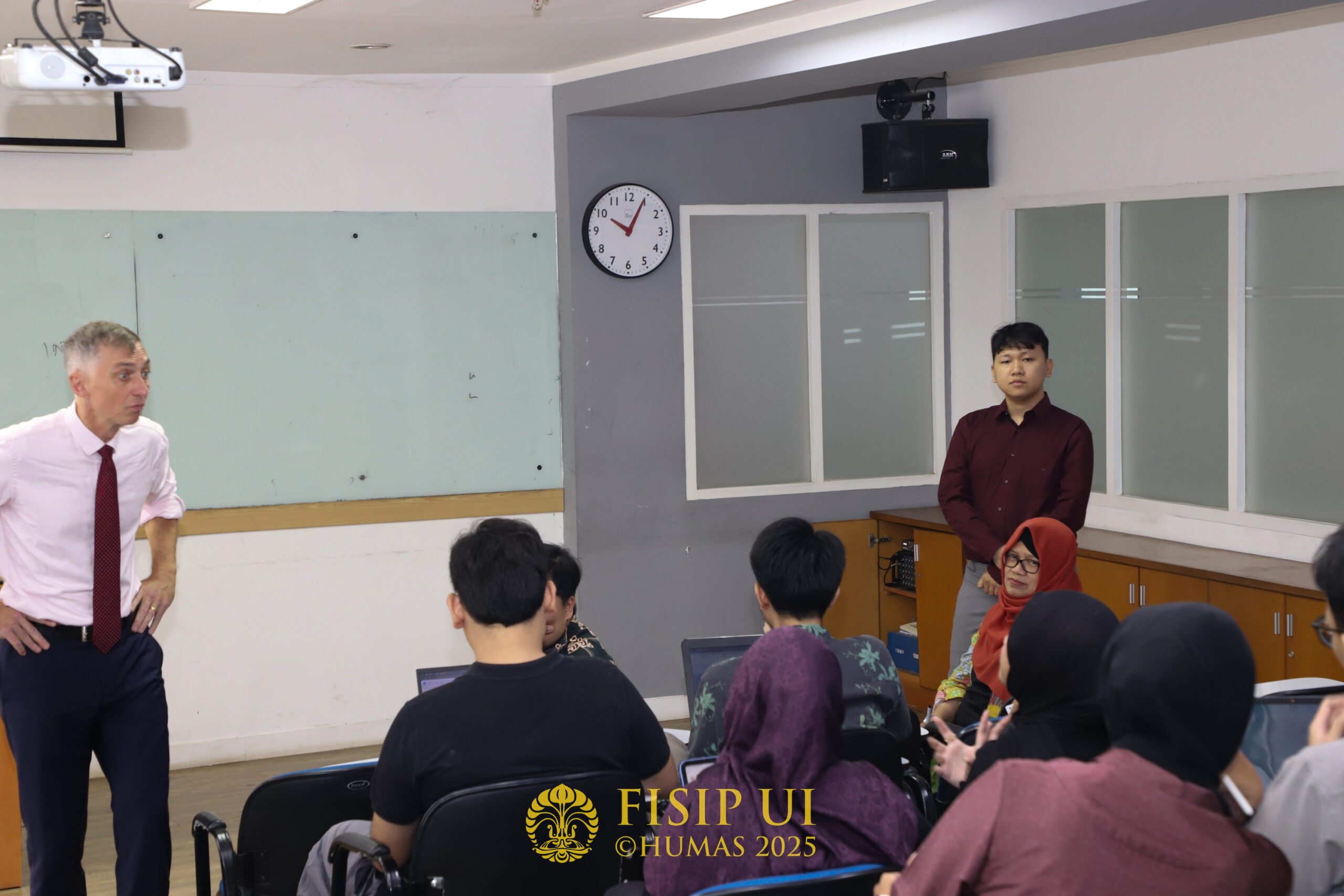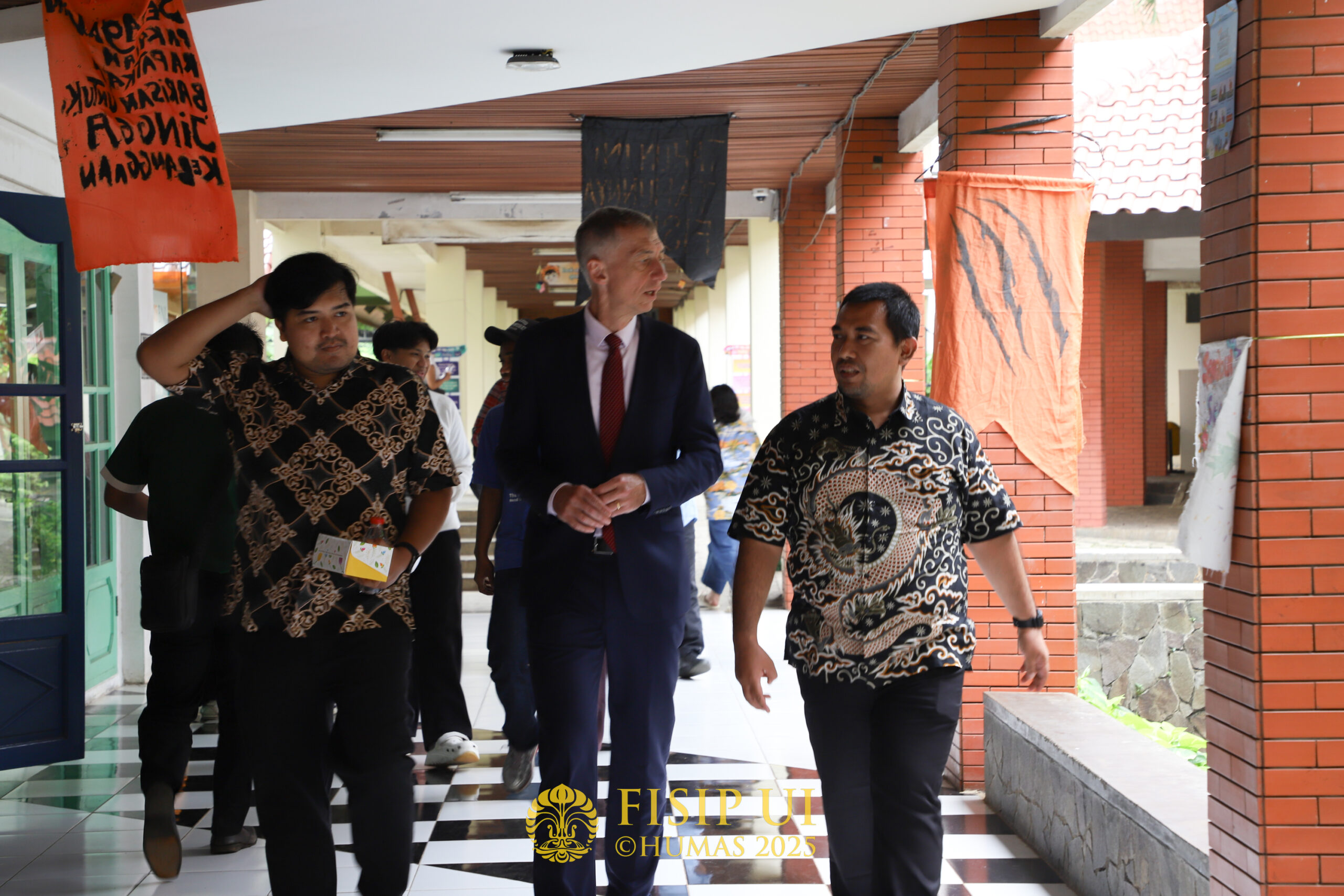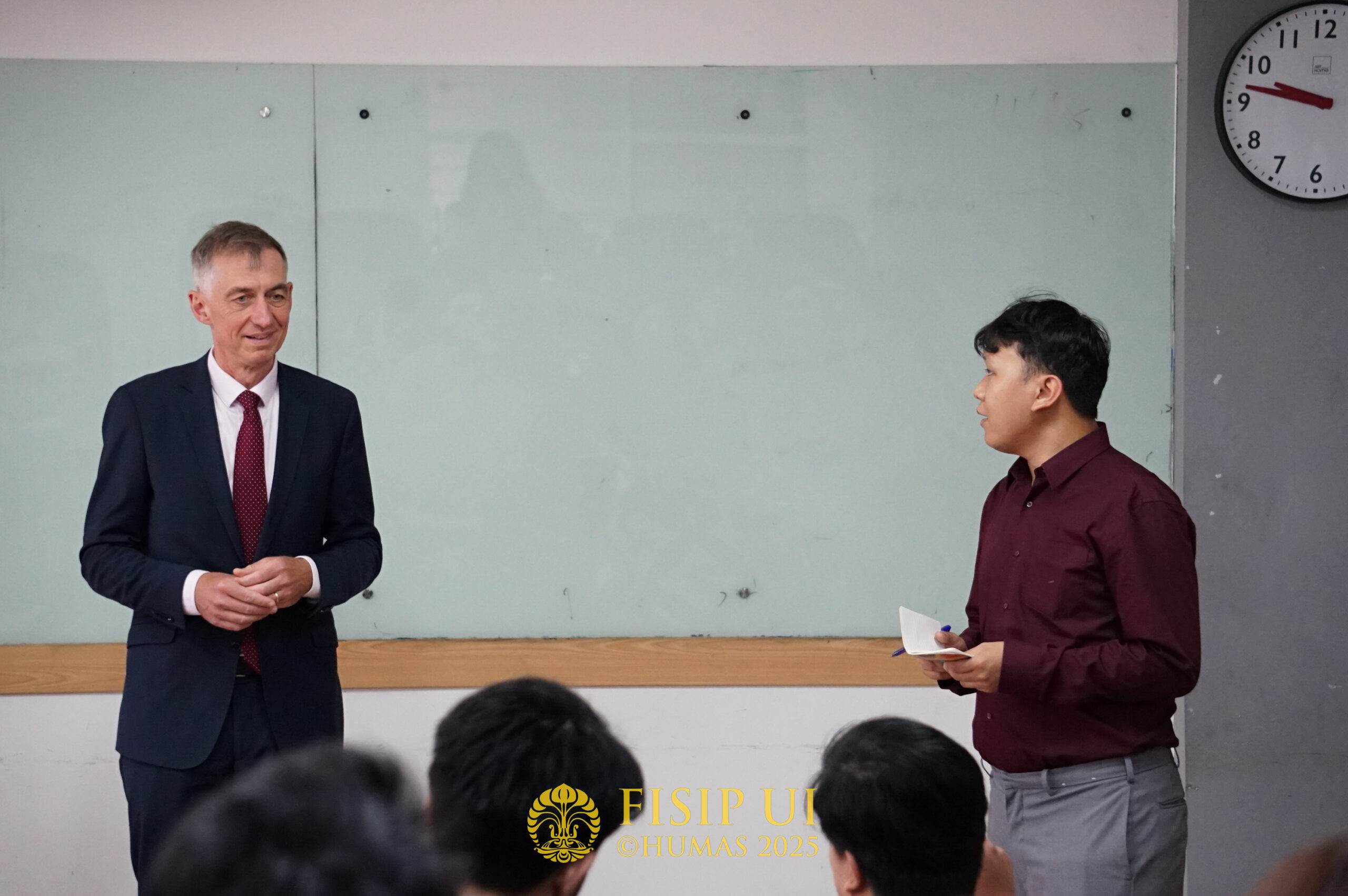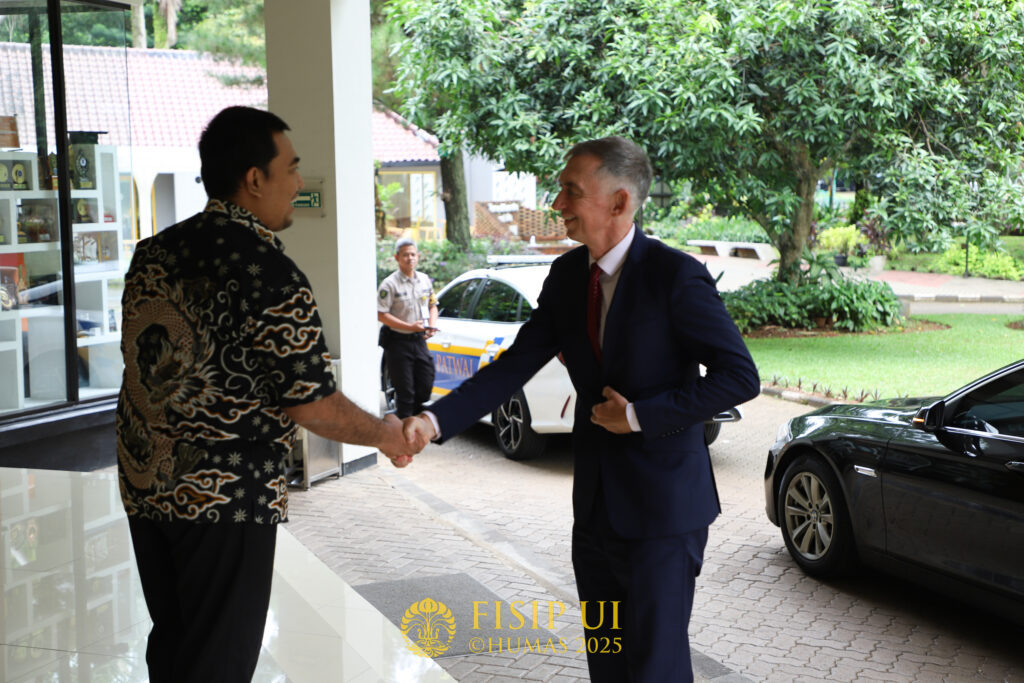
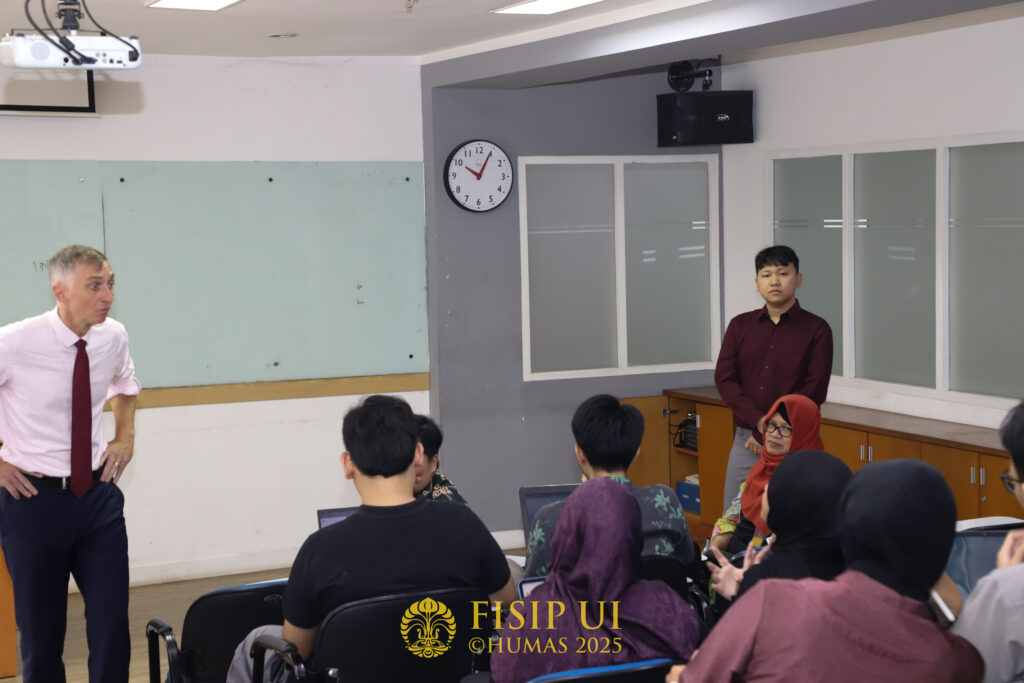
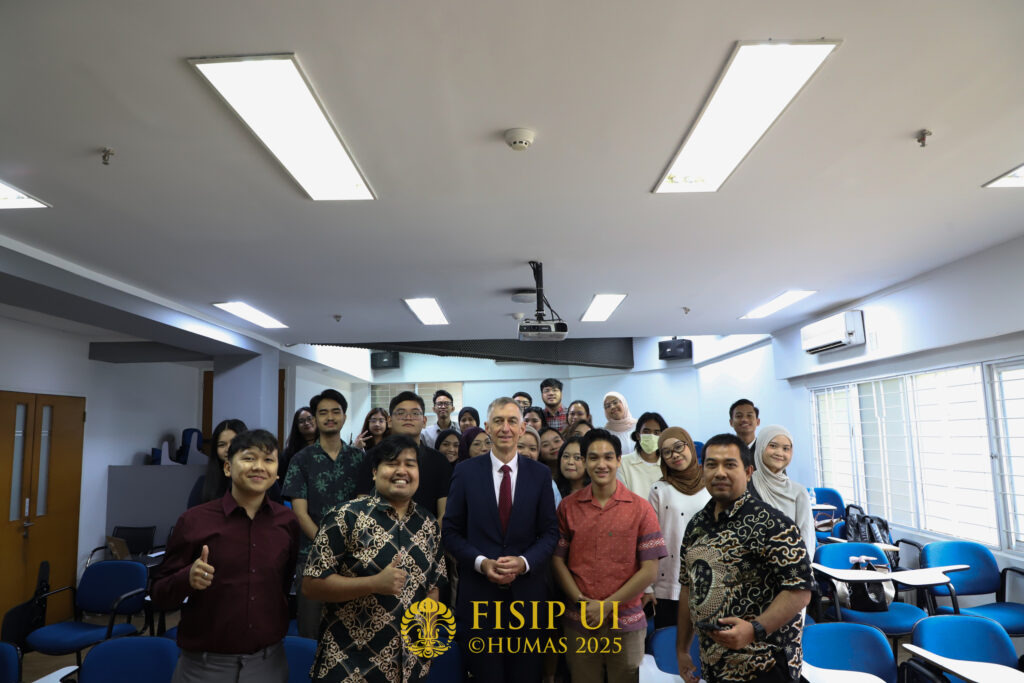
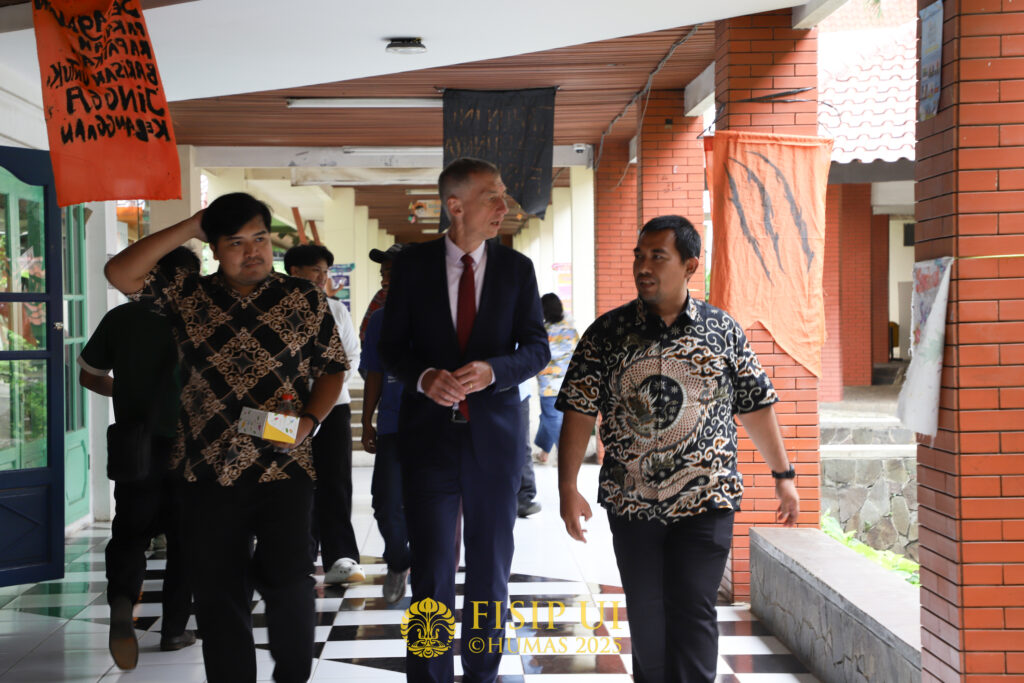
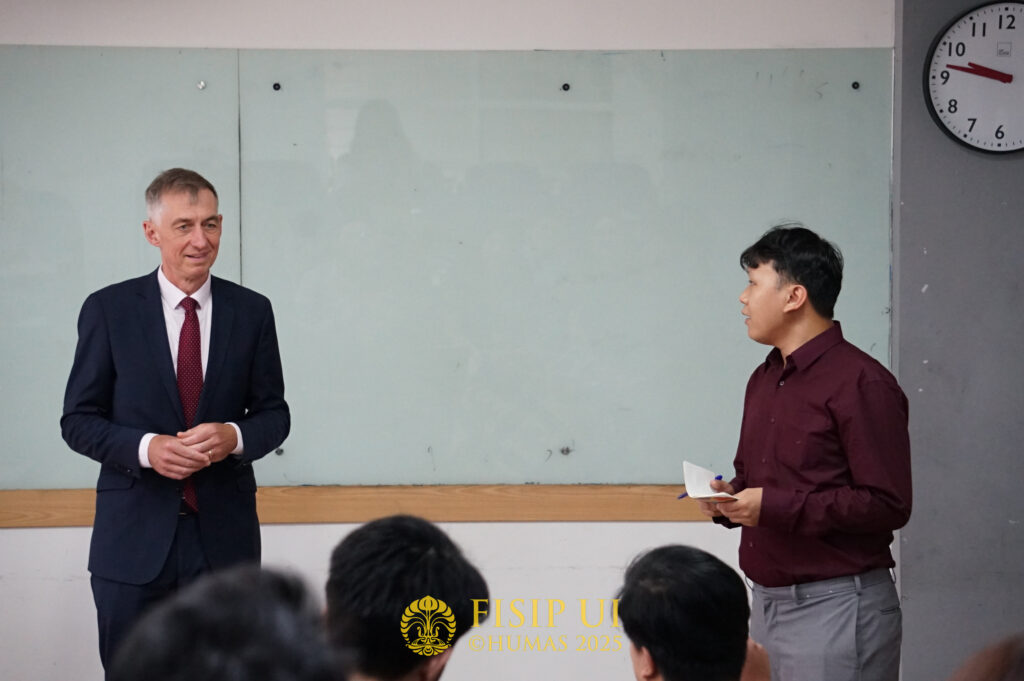
The German Ambassador to Indonesia, Ambassador Ralf Beste, visited FISIP UI on Wednesday (12/11). Ambassador Ralf, who was recently appointed, attended as a guest lecturer in the West European Politics course at the Department of Political Science, Universitas Indonesia. During his visit, he delivered a presentation on the current political situation in Germany, as well as his perspective on the geopolitical dynamics of the European Union and global developments.
In the lecture, Ambassador Ralf highlighted the interconnection between Germany’s domestic political conditions and shifts in the international geopolitical landscape. He emphasized that China’s economic expansion and growing global influence are key factors that must be carefully observed, particularly by European countries. According to him, China’s various economic breakthroughs pose significant challenges for Germany, thereby reinforcing the urgency of strengthening cooperation with Southeast Asia. In this context, Germany views ASEAN—especially Indonesia—as a strategic partner in trade and global cooperation, including efforts to maintain stability and security in the Southeast Asian region.
The discussion session was lively, with high participation from students. One student, Deswita, raised a question regarding how Germany views global economic competition with China in Southeast Asia, considering that both countries maintain economic and technological cooperation with Indonesia.
In response, Ambassador Ralf stressed that Germany’s relationship with Indonesia is built on collaborative values rather than competition. He affirmed that the partnership between the two countries is grounded in shared values, mutual benefits, and a commitment to addressing strategic issues collectively.
This discussion with the German Ambassador serves as an example of how the Department of Political Science at Universitas Indonesia continues to develop innovative learning methods. Rather than relying solely on in-class interactions using whiteboards or projectors, the department consistently involves practitioners, diplomats, and external partners to provide empirical perspectives that enrich students’ understanding of the theories and concepts they study.